
7 Tools Every Homeowner Should Have for Small Home Painting Projects
It’s an average Saturday morning and suddenly you’re bursting with energy to transform your home. Sound familiar? There’s something satisfying about freshening up a space with a new coat of paint. You might need to cover small scuff marks, repaint a small accented wall, or touch up trim. These small DIY projects can be manageable for beginners with the correct tools and preparation. That said, while minor updates can make a great weekend project, larger jobs such as full-room repaints, exterior work, or high-detail cabinetry are always best left to the professionals. At Lowcountry Painting in Charleston, SC, we bring the expertise, precision, and results that will ensure a long-lasting, bright finish. But for those small touch-ups, we believe in you. Here are 7 essential painting tools that every homeowner should have on hand for simple DIY painting projects.
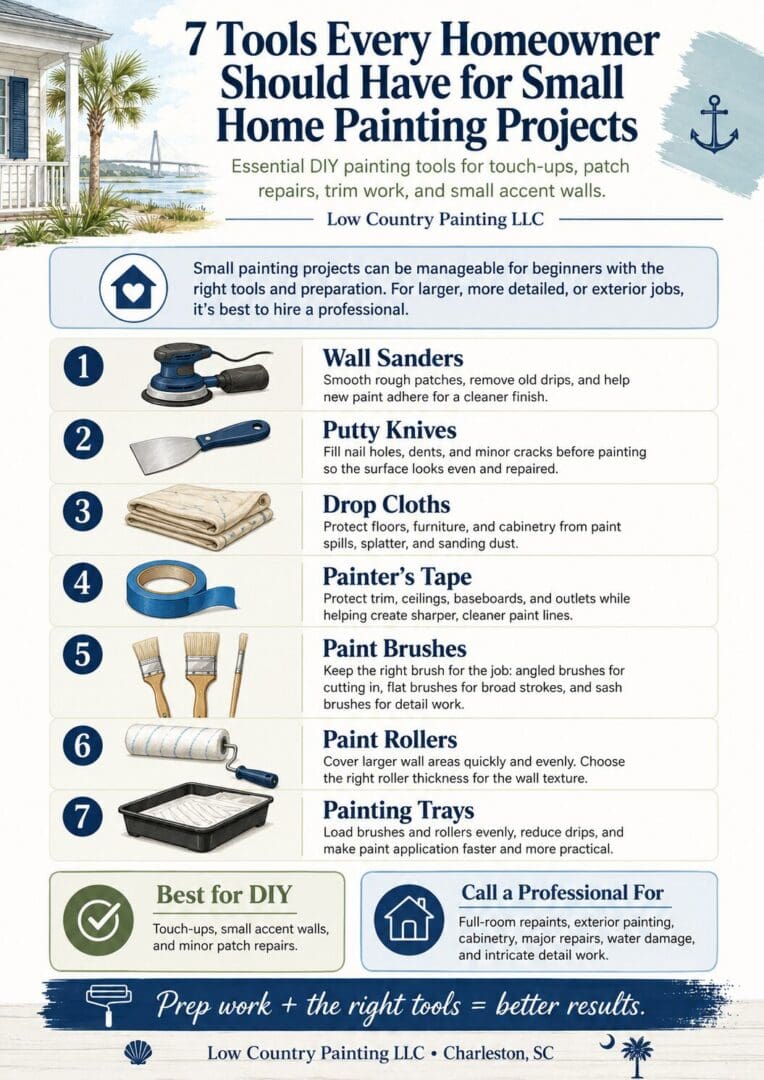
1. Wall Sanders
Achieving a smooth finish, even for minor projects, beigns before any paint can opens. Wall sanders are essential for preparing surfaces by removing older paint drips, smoothing the rough patches, and helping new paint properly. This is especially useful for chipped paint repair, as it keeps your layers even and smooth. Skipping this crucial step can leave you with an uneven texture and visible imperfections. For smaller repairs, simple, light sand can make a big difference in the final result.
2. Putty Knives.
Before painting a small repair project, you’ll probably have nail holes, dents, or minor cracking to fill. A good putty knife with putty allows you to apply and smooth any imperfections evenly and cleanly. For smaller patch work, this tool is an absolute must. But if walls have significant cracking, water damage, or widespread errors, it likely indicates a deeper underlying issue that may require professional expertise before painting begins.
3. Drop Cloths
Protecting floors and furniture is equally as important as updating your walls. Drop cloths shield surfaces in the home like flooring, sofas, or cabinetry from spills, splatters and dust created during any sanding work. They’re usually canvas, since the material is more durable and less slippery than other plastic alternatives. Even in small spaces, you’ll need to keep your cozy spaces clean.
4. Painter’s Tape
Painter’s tape protects trim, baseboards, ceilings, and even electrical sockets from catching those accidental brush stokes. Using it, you can create sharper, cleaner lines and keep the small project looking polished and professional. Tape alone can’t guarantee perfection when used by a novice. Proper removal timing and paint application techniques are equally as important. If you have the shakes, it’s important to call a professional so you don’t paint your white trims blue and your ceilings green.
5. Paint Brushes
Obviously, any paint job is going to require paint brushes of some sort or another. But which brushes should you be looking for? There are three main styles that are essential that you carry – angled brushes, flat brushes, and sash brushes.
Angled brushes are mostly used for cutting in around corners, ceilings, trim, and any other edges. Slanted bristles give better control and cleaner lines. They’re perfect for smaller accent walls or small touch-ups.
Flat brushes are best made for broad strokes on trim, doors, and flat surfaces. They distribute paint evenly and provide the best overall coverage among paint brushes. When they’re used properly, they can create smooth finishes on small areas, though improper technique can leave streaky brush marks.
Sash brushes are smaller with a more narrow tip, and are designed specifically for detailed trim and narrow surfaces like window frames. The narrow bristle allows for more precision than other brush types, but isn’t useful everywhere. While this is ideal for detailed work, pieces that are excessively intricate should be left to the professionals.
6. Paint Rollers
Rollers serve a different function than traditional brushes. They are designed for covering larger wall sections quickly and evenly – something other ‘brush’ styles simply can’t replicate. Choosing the right thickness based on the wall texture is absolutely key to avoiding uneven coverage.
7. Painting Trays
With any painting tool, especially paint rollers, painting trays are essential. Designed to hold paint that can easily fit any brush of your choice, these make a paint job quicker and more practical. It seems simple, but also plays a big role in gaining even coverage. With it, you can properly load your rollers without oversaturating it. This prevents dripping and overcoverage.
Small touch-ups, minor accents, or little patch repairs are manageable DIY projects that make a perfect way to fill up a productive weekend. However, painting is about far more than applying a new color. It’s about prep work, technique, and long-term durability and results that please and last. If you’re considering repainting several rooms, updating home exterior paint, refinishing cabinets, or just want a stress-free result, Lowcountry Painting is here to help in any way we can. Our expert team specializes in providing a professional and seamless experience for each client in the Lowcountry. DIY has its place, but when you want efficiency, beauty, and professional looks, trusting Lowcountry Painting is hands-down your best choice.