
Why Are Porch Ceilings Painted Blue in Charleston?
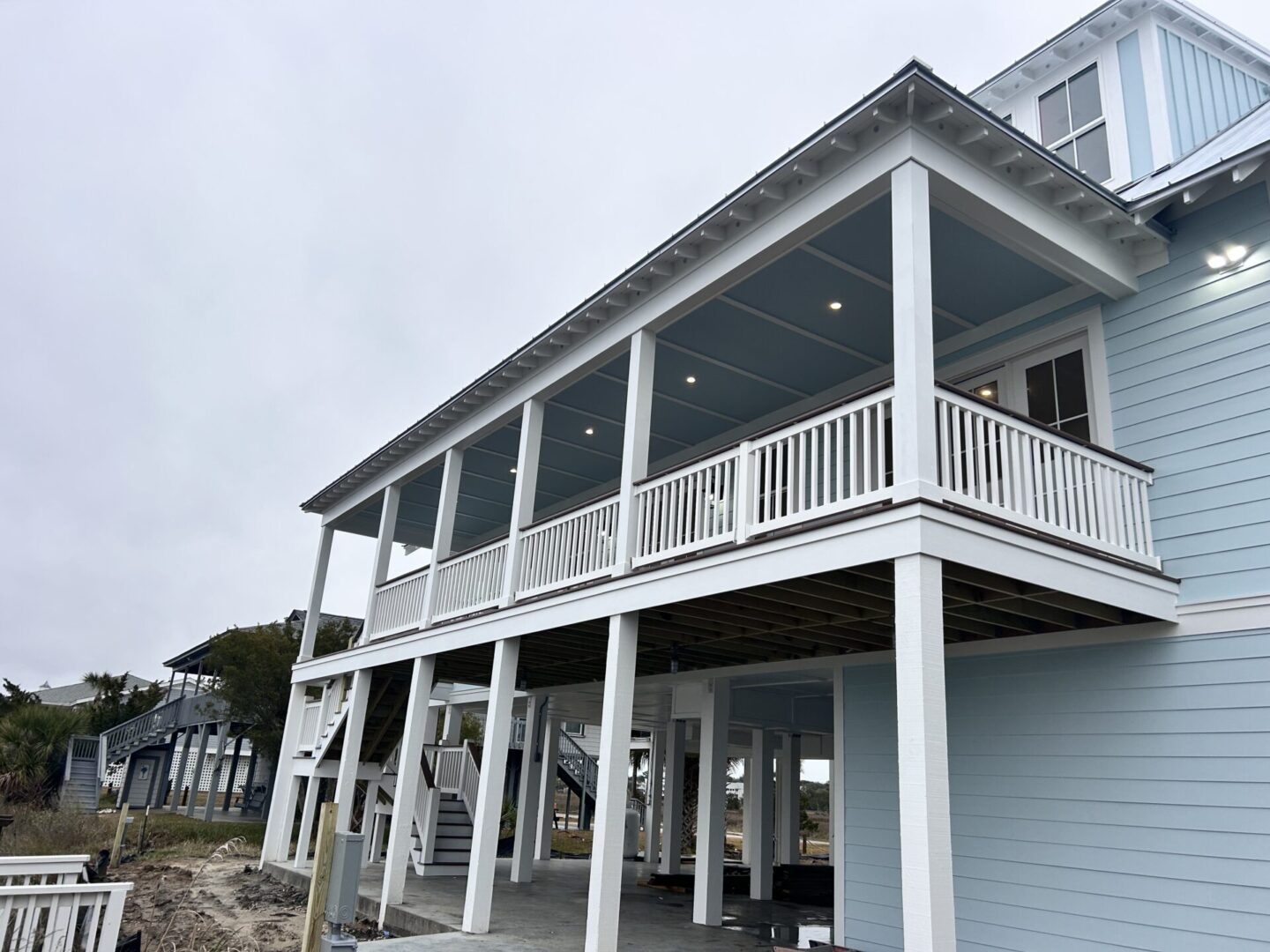
Have you ever taken a stroll through the stunning, historic Charleston neighborhoods and noticed the city’s’ most unique porch quirk? That’s right, hundreds of Charleston homes have porches adorned with beautiful light blue ceilings, despite the color palette of the rest of the home. There are many perceived myths about the real secret behind this beautiful touch, but few Lowcountry dwellers know the truth. In Charleston, this feature – often known as ‘haint blue’ – has history deeper than what the paint coats reveal at first glance.
What Is “Haint Blue”?
The widely known term ‘haint’ is actually a variation on the word ‘haunt.’ The word may not immediately give you warm and fuzzy feelings inside, but the meaning behind the word isn’t haunting at all. The roots of the word can be traced back to the local Gullah Geechee culture of the Lowcountry, who coined the term as a way to describe the mystical color of the Lowcountry ocean.
The slave trade brought new ideals and belief systems to the Americas, and in some ways, blended traditional African beliefs with standard American Christianity. The Gullah Geechee people believed that haints (also known as ghosts, haunts, or spirits) were unable to cross over water. This led them to paint their porches various shades of blue to trick the haints from crossing over into their home to invade their lives.
Who Are the Gullah Geechee People?
A surprising amount of Lowcountry dwellers have experienced the Gullah Geechee without even realizing it. Ever been on a sunny trip to the Charleston City Market and noticed the endearing women smiling as they line up their many intricate, lovingly handcrafted sweetgrass baskets? Sweetgrass baskets are strongly associated with the Gullah Geechee people. They are descendants of slaves and most have belief systems that blend African witchcraft with Christianity as a result of the beautiful blend of the two cultures.
What’s so interesting about haint blue is its variability. Today, hainted houses are almost always a lighter, pale blue, but this wasn’t always the case. When the tradition began, most Gullah Geechee people were just adjusting to a life post-slavery and did not necessarily always have the resources to duplicate specific paint colors. Haint blue was less of a definitive thing and more of an effort to keep spirits out, as the paint was usually made from whatever pigments could be easily and cheaply found on hand. There is no true universally agreed upon color for haint blue.
Haint Blue Myths
The history behind the haint blue porches is often misunderstood due to the burying of Gullah Geechee culture and the gentrification of their people. The most common myth on the reasoning behind the hue is that the blue ceilings will repel bugs from nesting on it by tricking them into thinking it is the sky. While this is completely phony today, there actually may have been some truth to it. Back in that time, most paints were created using milk, indigo dyes, and importantly, lime. Lime juice is a natural repellent for insects and likely did help keep them away from the home. This meant it may have served a double purpose, or maybe even more that we don’t know!
Now, you may or may not believe in the magic of the paint ridding unwelcomed ghosts and spirits (or even bugs) from the home, but it is hard to deny its fascinating and deep history. If you’re looking to cover up your blue porch ceiling, we certainly hope that you consider keeping it with its regional, one-of-a-kind charm that you just don’t find in other areas of the country. At Low Country Painting in Charleston, we’re committed to preserving history while still providing professional results that we know you’ll love.
